


Running Pony audio engineer Nathan Reisman shows young filmmakers how to operate a field audio mixer.
By Brad Ellis, Writer/Producer/Director
If you’re looking to begin a career in video production, you don’t have to break the bank by moving to the West Coast or enrolling in an elite, high-cost film school. Sure, those old school approaches might once have seemed a safe bet for that extra “leg up,” but the rise of digital technology has vastly changed the world of film and video. With instant streaming, personal YouTube channels, and self-funded DIY projects consuming our daily lives, opportunities await at every turn for clever, creatively-driven individuals. So, then: where to begin?
I was fortunate to start improving my film production skills in the late ‘90s when everything was quickly turning digital. Inexpensive prosumer cameras and user-friendly non-linear editing programs were now the
norm, not the exception. DVDs became all the rage and, as a result, “film school” was taught directly in the comfort of my own living room. I absorbed as many DVD special features as possible – director commentary tracks, making-of featurettes, behind-the-scenes lessons on set lighting and makeup applications – and these tutorials became my personal classroom. More importantly, bonus features pulled back the curtain and revealed the tricks and trades of the pros: they’re showing us how to do it, so let’s grab a camera, go outside, and do it ourselves! Trial and error won the day: I made embarrassing mistakes each time at bat, but at least I learned while surrounded by close friends and collaborators.

Even if you’re new to film and video production, you can still find entry-level opportunities all over the city. For younger beginners, the annual Indie Memphis Youth Film Festival is easily the best bet in town. These kids receive professional hands-on workshops and one-on-one mentoring sessions, but they also get to screen their own short films in front of their peers. When I think back to high school, the chance to premiere something I made in front of an actual audience would have been a dream come true! Now, these students have the luxury of a 50-foot screen and a sound system that would rival a concert hall. My Running Pony colleagues Mitch Martin and Nathan Reisman were among a group of professionals who provided workshops at the festival on audio, editing, and other aspects of production and post. The Youth Fest also offers a mentorship program that connects students of similar interests with professional industry advisors. The goal? Kids shoot and edit a short film over the course of a semester, with their advisor overseeing each step of production along the way. I’m a mentor volunteer and can assure any budding filmmaker that this program is a golden opportunity to jumpstart their craft.
I cannot stress enough: you must get out of your comfort zone and network. Find an avenue of people with similar interests and shake hands with everyone you can. The biggest ticket in town to do just that is the annual Indie Memphis Film Festival, a week-long event where mixing and mingling with local creatives is almost more important than attending the movies. Filmmakers are always looking to grow their teams, so if someone needs an extra hand on their music video or short film, sign up for crew! You may not start out at the top of the totem pole, but you’re going to learn about set life and meet some really cool people along the way. Additionally, take advantage of the awesome year-long events Indie Memphis sponsors: weekly “Indie Wednesday” movie screenings across the city, monthly “Shoot & Splice” professional workshops, and other offerings such as the Micro Cinema shorts blocks and Indie Grants that award cash prizes.
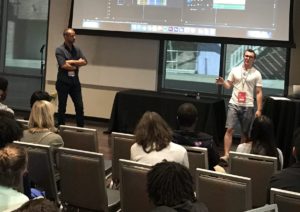
Running Pony video editor and post-production supervisor Mitch Martin (on the right) shows students some advanced editing techniques.
Schmoozing with festival crowds isn’t your thing? Try contacting the Memphis and Shelby County Film Commission to work on larger productions in town: you could sign up to be a production assistant for the next American Idol cattle call auditions, or maybe a costume intern on a TV show like Sun Records. Cameras are always rolling somewhere in the city of Memphis, so get out there and see what’s happening. Try a college-level production course that fits your area of interest: maybe you want to learn more about cinematography, or you think you’ve got what it takes to be a producer or director, or perhaps you enjoy the high-stakes pressure of live TV production. If you’re already enrolled at a university, simply ask your advisor if there are any available internship programs around – you may just wind up assisting at a local video production house like Running Pony, if the timing and your experience align. Search social media boards for organized filmmakers’ groups to follow, or enroll in an independent acting class if for no other reason than to witness the talent/on-camera relationship dynamic.
Here’s the bottom line: Los Angeles and New York City are no longer the only big kids on the block when it comes to big-budget film and video production. State tax incentives have shifted moviemaking and commercial production to all corners of the country – just look at Louisiana and Georgia, two states that are now hotbeds of cinematic activity. From my experience, if you want a foot in the door you have to embrace trial-and-error, and you must be willing to break out of your comfort zone. And never forget your passion – what makes you you will be recognized in the industry, as long as you stay true to your vision and to yourself. Creativity and the demand for product aren’t going anywhere – only now, we have all kinds of production tools and cost-effective resources that beg for exciting content creation. If that appeals to you, pull back the curtain and take a good look around – I promise the opportunities are right in front of you.

